
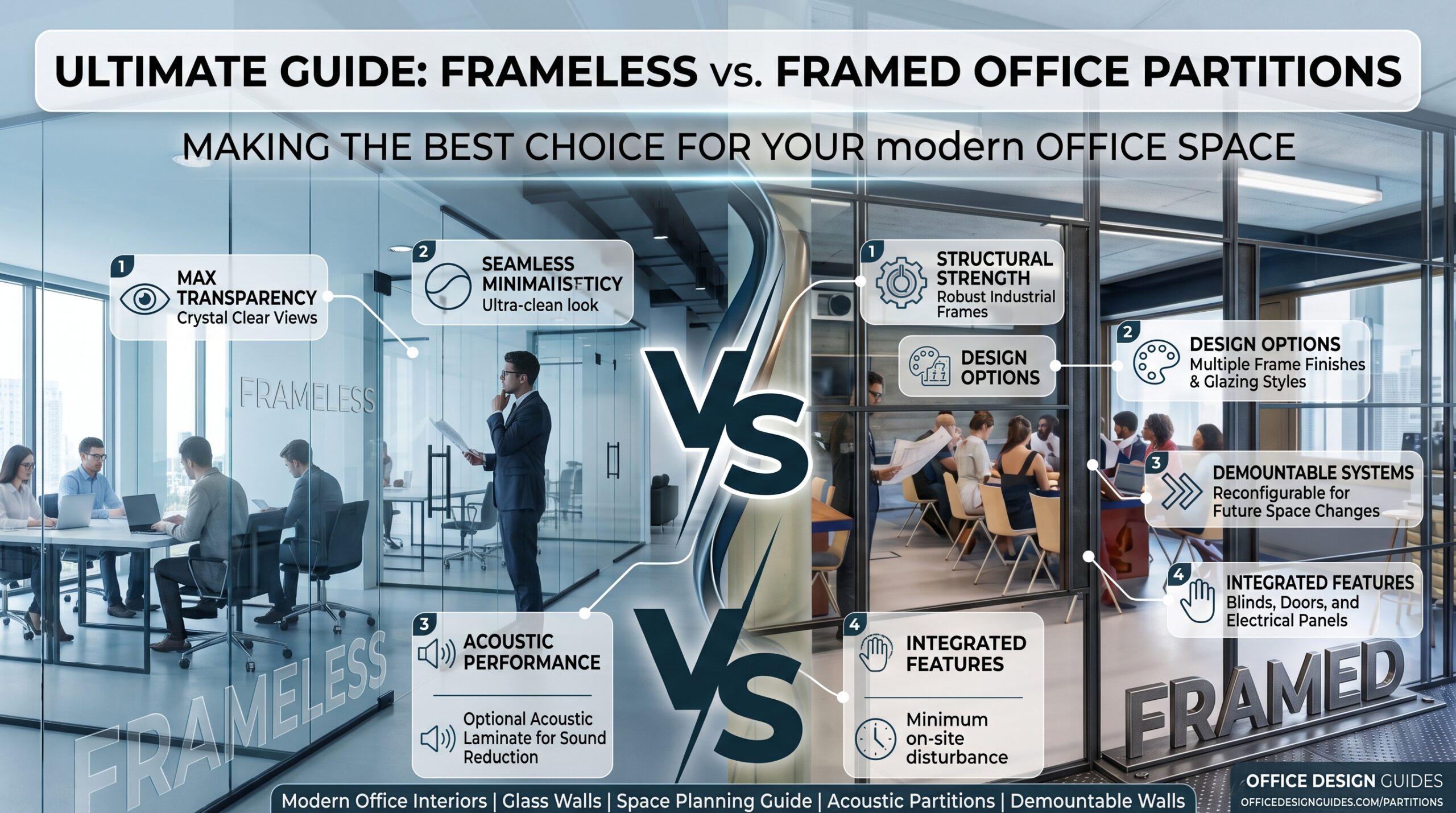
Creating a functional, visually appealing office layout requires balancing natural light, acoustic control, visual privacy, and budget. When designing meeting rooms, executive cabins, or functional department dividers, glass partitioning is one of the most effective architectural solutions available.
The primary design choice comes down to two styles: Frameless Glass Partitions and Framed Glass Partitions. Both offer distinct structural advantages, aesthetic profiles, and acoustic properties.
1. What Are Frameless Glass Partitions?
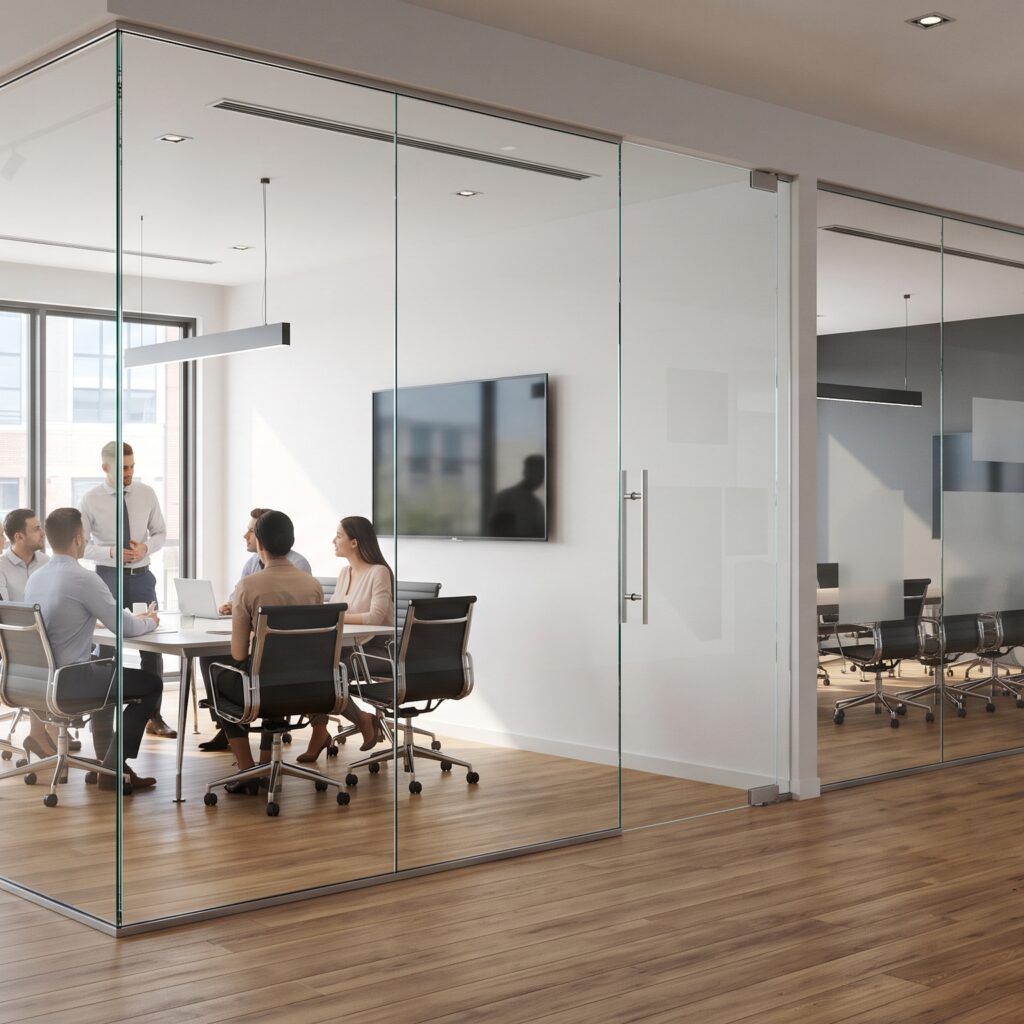
Frameless glass partitions use minimal perimeter hardware—typically slim aluminum U-channels mounted along the floor and ceiling, or discreet base tracking. The glass panes sit edge-to-edge, joined together with clear dry joints or specialized silicone glazing.
Key Benefits
- Maximum Transparency & Light Flow: Without vertical mullions breaking the sightlines, daylight penetrates deep into interior rooms, making smaller offices feel significantly larger.
- Modern, Minimalist Aesthetic: Frameless walls deliver a clean, high-end look popular in tech hubs, design studios, and corporate headquarters.
- Flexible Manifestation: Easy to customize with decorative frosted films, logo manifestations, or gradient privacy bands without visual frame clutter.
Limitations
- Lower Acoustic Ceiling: Single-glazed frameless systems generally achieve acoustic ratings between 32 dB to 38 dB Rw, making them ideal for standard work zones, but less suitable for confidential boardroom discussions unless engineered with specialized acoustic laminated glass.
2. What Are Framed Glass Partitions?
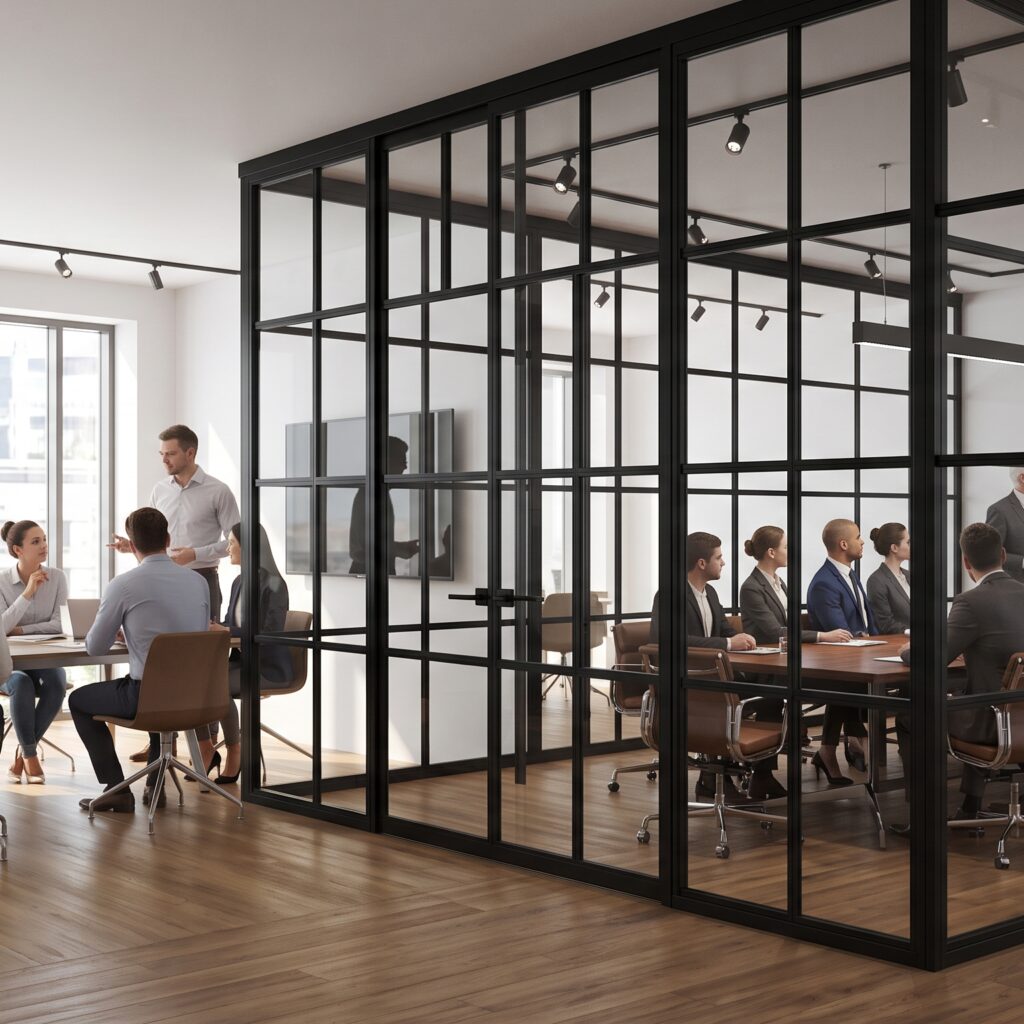
Framed glass partitions encase each glass module inside visible structural aluminum or steel profiles. These range from heavy-duty industrial framing and slimline architectural profiles to trendy Crittall-style black grid partitions.
Key Benefits
- Superior Acoustic Insulation: Full perimeter gaskets and robust frames allow for double-glazing configurations, reaching sound insulation performance of 40 dB to 50+ dB Rw.
- High Structural Durability: The framing adds extra rigidity, making framed systems ideal for high-traffic environments, tall ceiling heights, and heavy-use pivot or sliding doors.
- Bold Architectural Character: Black, bronze, or custom powder-coated aluminum framing adds definition and an industrial or executive flair to interior architecture.
Limitations
- Visual Obstruction: Vertical frames interrupt sightlines, which can make compact office rooms feel slightly more enclosed compared to continuous glass runs.
Head-to-Head Comparison
| Feature | Frameless Glass Partitions | Framed Glass Partitions |
| Aesthetic Style | Minimalist, ultra-sleek, seamless | Bold, industrial, structured |
| Sound Insulation (Acoustics) | Moderate (32–38 dB single-glazed) | High to Ultra-High (38–50+ dB double-glazed) |
| Glass Thickness | 10mm to 12mm Toughened / Laminated | 8mm to 12mm (Single or Double Glazed) |
| Hardware / Framing | Top & bottom slim U-channels only | Full perimeter frames + vertical/horizontal mullions |
| Natural Daylight | Unobstructed transmission | Slightly segmented transmission |
| Ideal Application | Open-plan zones, general meeting rooms | Boardrooms, executive suites, HR & finance offices |
How to Choose the Right Solution
Choose Frameless Partitions If:
- Your priority is an open, airy feeling: Perfect if your space lacks exterior windows and needs natural sunlight to travel across multiple rooms.
- You want clean, unobtrusive lines: Great for modern reception areas, casual collaboration pods, and retail showrooms.
Choose Framed Partitions If:
- Soundproofing and privacy are critical: Essential for conference rooms where confidential discussions, financial reviews, or board meetings occur.
- You want a distinctive interior statement: Matte black frames or grid-style industrial divisions create high visual impact while defining distinct functional zones.
Conclusion
Both frameless and framed glass partitions offer clear advantages. In modern workplace fit-outs, a hybrid approach often yields the best results: frameless glass for open workspaces and department corridors, paired with double-glazed framed glass for executive cabins and conference rooms requiring maximum privacy.